 A Guide to Monthly Testosterone Replacement Therapy Costs and Expenses

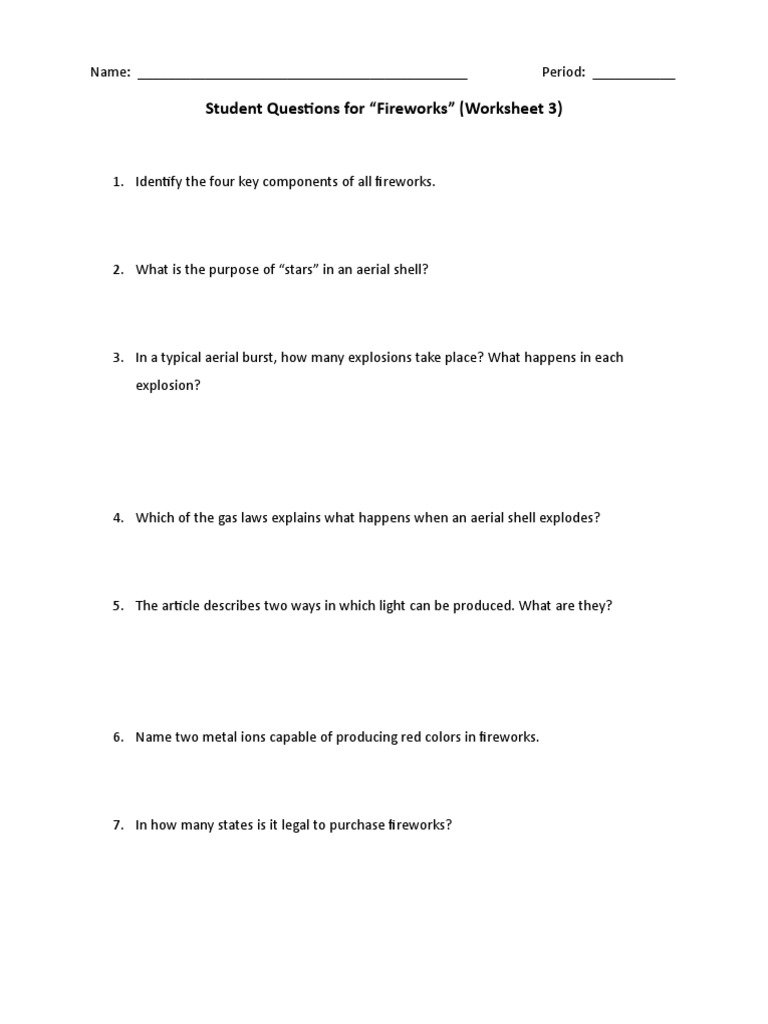
When an aerial shell explodes, Boyle’s Law is the gas law that explains the fascinating physics behind the spectacular burst of colors and patterns in the sky. As the shell detonates, the volume of gas rapidly expands, leading to a sudden drop in pressure. This change causes the gases to disperse at high speeds, creating the mesmerizing fireworks display we all love to witness. Join us as we delve deeper into the science behind aerial pyrotechnics and uncover the magic of which of the gas laws explains what happens when an aerial shell explodes?

Which Gas Law Explains What Happens When an Aerial Shell Explodes?
Welcome, young scientists! Have you ever watched fireworks light up the night sky and wondered what makes them burst into those beautiful shapes and colors? Well, one of the exciting things that happen during a firework display is when an aerial shell explodes. Today, we are going to learn about the gas laws and how they explain what happens when an aerial shell explodes. So, let’s dive into the world of gases and explosions!
The Gas Laws
Before we can understand how an aerial shell explosion works, we need to talk about the gas laws. The gas laws are a set of scientific principles that explain the behavior of gases under different conditions. There are four main gas laws that we will explore briefly:
1. Boyle’s Law
Boyle’s Law states that the pressure of a gas is inversely proportional to its volume when the temperature is held constant. In simpler terms, if you squeeze a gas into a smaller space, its pressure increases. This law helps us understand how gases behave when they are confined in a limited space, like inside the shell of a firework.
2. Charles’s Law
Charles’s Law tells us that the volume of a gas is directly proportional to its temperature when the pressure is constant. In other words, if you heat up a gas, it will expand. This law is essential for understanding how the temperature of gases affects their volume and pressure during an explosion.
3. Gay-Lussac’s Law
Gay-Lussac’s Law states that the pressure of a gas is directly proportional to its temperature when the volume is constant. This law helps us understand how the pressure of a gas changes as it heats up or cools down.
4. Avogadro’s Law
Avogadro’s Law states that equal volumes of gases at the same temperature and pressure contain an equal number of molecules. This law helps us understand the relationship between the volume of a gas and the number of molecules it contains.
What Happens When an Aerial Shell Explodes?
Now that we have a basic understanding of the gas laws, let’s explore what happens when an aerial shell explodes during a fireworks display. When a firework is launched into the sky, it contains various chemical compounds that burn and release gases. These gases build up pressure inside the firework shell until it reaches a critical point.
At this critical point, the shell can no longer contain the pressure, and it explodes. The rapid release of gases during the explosion creates the stunning visual effects we see in the sky, such as colorful bursts and sparkling trails. The gas laws help us explain why the explosion occurs and how the gases expand and interact with each other.
The Role of Boyle’s Law
One of the gas laws that play a significant role in explaining what happens during an aerial shell explosion is Boyle’s Law. As we mentioned earlier, Boyle’s Law states that the pressure of a gas is inversely proportional to its volume when the temperature is constant.
When a firework is ignited, the chemical reactions inside the shell produce hot gases that rapidly expand. As these gases expand, they exert pressure on the walls of the firework shell. According to Boyle’s Law, as the volume of the gas decreases (due to the confined space inside the shell), the pressure increases. Eventually, the pressure becomes too high for the shell to withstand, leading to the explosion that releases the gases into the sky.
Understanding Charles’s Law in Firework Explosions
Another gas law that comes into play during an aerial shell explosion is Charles’s Law. Charles’s Law tells us that the volume of a gas is directly proportional to its temperature when the pressure is constant. In the context of fireworks, the intense heat generated by the chemical reactions causes the gases inside the shell to expand rapidly.
As the gases heat up, their volume increases, putting more pressure on the walls of the firework shell. This increase in volume due to the rising temperature eventually contributes to the shell’s rupture, allowing the gases to escape and create the dazzling display of lights and colors we enjoy watching.
So, young scientists, we have learned that the gas laws, particularly Boyle’s Law and Charles’s Law, help explain what happens when an aerial shell explodes during a fireworks display. The interplay of pressure, volume, and temperature inside the firework shell leads to the spectacular bursts and colors that light up the night sky.
Next time you watch a fireworks show, remember the role of the gas laws in creating those magical moments of explosions and sparkles. Keep exploring the wonders of science, and who knows, maybe one day you’ll be the mastermind behind a fireworks display of your own!
Stay curious and keep learning, young scientists!
1. Identify the four key components of all fireworks. 2. What is the pur purpose of "stars" in an ae
Frequently Asked Questions
Which gas law explains what happens when an aerial shell explodes?
When an aerial shell explodes, the gas law that best explains the phenomenon is the ideal gas law. The ideal gas law states that the pressure, volume, and temperature of a gas are related through the equation PV = nRT, where P is pressure, V is volume, n is the number of moles, R is the gas constant, and T is the temperature in Kelvin.
How does the ideal gas law apply to the explosion of an aerial shell?
During the explosion of an aerial shell, the rapid release of gases causes a sudden increase in pressure due to the confined space within the shell. This increase in pressure leads to the expansion of gases, resulting in a burst of fireworks that we see in the sky. The ideal gas law helps to explain the relationship between the volume of gases expanding, the pressure exerted, and the temperature changes during the explosion.
What role does Avogadro’s law play in understanding the explosion of an aerial shell?
Avogadro’s law states that equal volumes of gases at the same temperature and pressure contain an equal number of molecules. In the case of an aerial shell explosion, Avogadro’s law helps to explain how the number of gas molecules inside the shell remains constant even as the volume of gas rapidly expands during the detonation process.
Final Thoughts
In conclusion, Boyle’s Law best explains what happens when an aerial shell explodes. The rapid expansion of gases within the shell, due to the ignition of the explosive materials, follows Boyle’s Law. The volume of the gas increases as the pressure decreases, leading to the powerful blast that propels the shell into the air. Understanding which of the gas laws explains what happens when an aerial shell explodes can provide valuable insights into the science behind fireworks displays.